Home Loan Singapore: The Complete Guide for a New Launch Condo
Everything about a home loan in Singapore for a private condo, from LTV, TDSR and tenure to packages, CPF, insurance and refinancing, with links to each detailed guide.
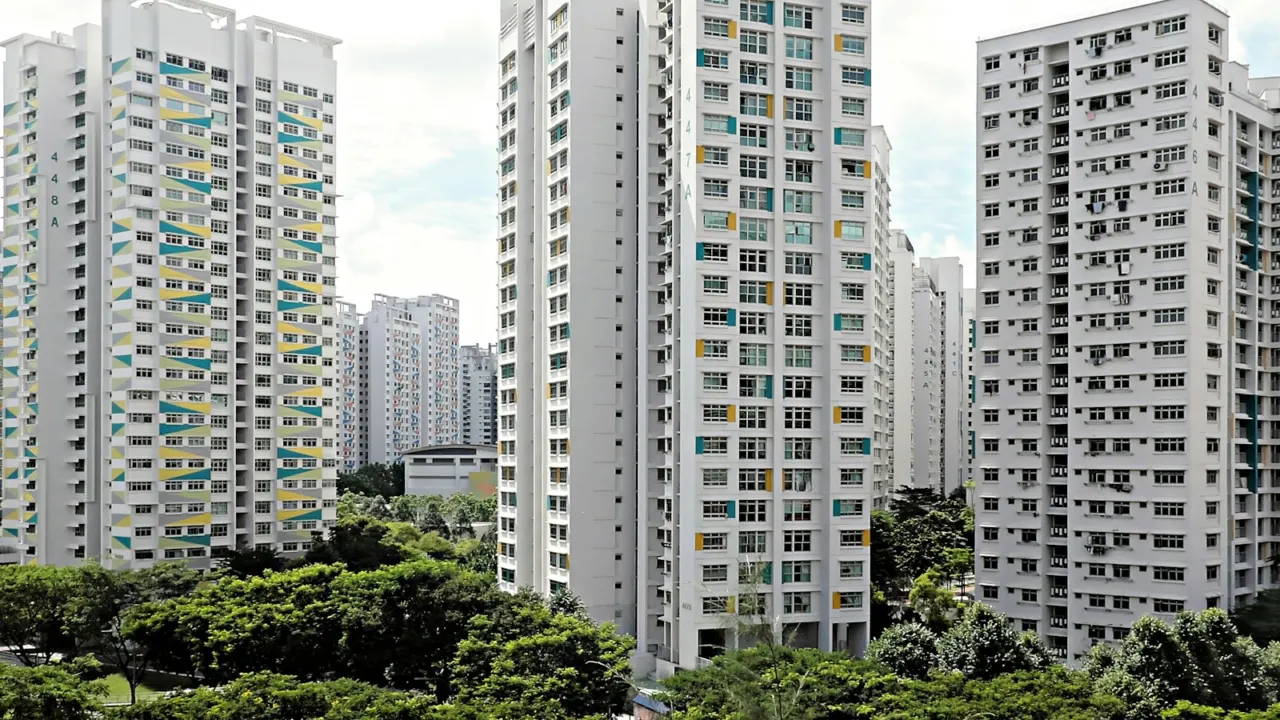
A home loan in Singapore for a private condo is always a bank loan, governed by MAS rules on how much you can borrow, for how long, and against how much income. For a new launch like LinkTown Residences (Hougang Central Residences), there is one extra layer: the loan is drawn in stages over several years of construction. This guide pulls the whole process into one place and links to the detailed guide for each step.
General information, not financial advice. Rules are as published by MAS and CPF Board in September 2026. Rates and bank terms change often. Verify with MAS, CPF Board and your bank.
1. Bank loan only
HDB loans are for HDB flats. A private condo needs a bank loan, so HDB’s concessionary rate, its lack of lock-in and HPS cover do not carry over. If you are upgrading, our HDB loan vs bank loan guide compares the two.
2. How much you can borrow: LTV
MAS sets the maximum loan-to-value (LTV) limits, based on how many housing loans you already have:
| Outstanding housing loans | Max LTV | Lower LTV if tenure > 30 years or past age 65 | Minimum cash |
|---|---|---|---|
| None | 75% | 55% | 5% (10% at 55% LTV) |
| One | 45% | 25% | 25% |
| Two or more | 35% | 15% | 25% |
The LTV applies to the lower of the price or the bank’s valuation. A low valuation means a bigger cash top-up; our bank valuation guide explains why. The rest of the price is your down payment, from cash and CPF, as set out in our condo down payment guide.
3. Tenure
The maximum tenure for private property is 35 years. Going past 30 years, or past age 65, drops you to the lower LTV tier. For joint borrowers, MAS uses an income-weighted average age. In practice, many buyers in their 40s and 50s choose a shorter tenure to keep the 75% limit.
4. How much your income supports: TDSR
Total monthly debt repayments, including the new loan, car loans, renovation loans and card debt, may not exceed 55% of gross monthly income. Banks test the new loan at the higher of 4% or the package’s thereafter rate, not at today’s rate. The Mortgage Servicing Ratio (MSR) does not apply to private condos. Our TDSR guide shows the income each indicative unit type needs, and how much condo you can afford combines LTV, TDSR, cash and stamp duty.
5. Get an in-principle approval early
An in-principle approval (IPA) tells you what a bank is prepared to lend based on your income, debts and credit record. It is not a final offer, but it is the best protection against booking a unit and then finding the loan falls short. Apply a few weeks before you expect to book, and keep payslips, tax assessments and CPF statements ready.
6. Choose a package
Most loans for uncompleted condos are floating, pegged to compounded SORA plus a spread. Fixed packages are more common for completed homes.
- SORA explained: how the benchmark works and where it stood in September 2026.
- Home loan rates in Singapore: advertised ranges and what to read in the offer letter.
- Fixed vs floating: when fixing makes sense, with a two-year cost scenario.
7. How a new launch loan is drawn
Under the normal progressive payment scheme, the first 20% (5% at the option, 15% at the sale and purchase agreement) comes from cash and CPF. The bank then pays the developer at each certified stage: foundation, frame, walls, roof, fittings, roads and drains, then 25% at TOP and 15% at CSC. You pay interest only on what has been drawn, so instalments start small and step up sharply at completion. The full schedule is on our payment scheme page.
For LinkTown Residences, completion is expected around 2030/2031, so most of the borrowing happens years after booking.
8. Paying with CPF
Your Ordinary Account can pay part of the down payment, stamp duty and monthly instalments, within the Valuation Limit and Withdrawal Limit. What you use is refunded to your CPF account with accrued interest when you sell. See using CPF for private property.
9. Protecting the loan
HPS covers HDB flats only. For a condo loan you arrange private cover, such as MRTA or level term life. Our mortgage insurance guide explains the options and the new launch twist of a loan that grows before it shrinks.
10. Special situations
- Upgrading and selling first: a bridging loan can cover the down payment until your flat sale completes.
- Fitting out at handover: a renovation loan is capped, short and counts towards TDSR.
- After the lock-in or at TOP: refinancing can cut your rate, subject to penalties and clawbacks.
Worked example: try the calculator
Illustrative only. No prices have been released. An indicative 2-bedroom of 678 sq ft (based on the developers’ recent project Parktown Residence, not LinkTown’s final plans) at analysts’ estimated S$2,500 psf is S$1,695,000. The 3% and 1.5% rates are assumptions, not quotes.
A 75% loan on that price is S$1,271,250. Over 30 years, the instalment once fully drawn is about S$4,390 a month at 1.5% and about S$5,360 at 3%. At the 4% stress-test rate it is about S$6,070, so with no other debts a borrower would need gross income of roughly S$11,030 a month to pass TDSR. Change the numbers below to test your own case.
Maximum loan & affordability (TDSR)
Estimates for illustration only, based on published IRAS/MAS rules. Rates change; confirm with IRAS, your bank and your lawyer.
For other unit types, apply the same method to the indicative sizes on the floor plans page. Real prices will be on the price list page once released.
Checklist before booking: check your LTV tier and tenure against your age; get an IPA; line up the 5% cash and the rest of the 20%; plan BSD and any ABSD; decide who pays from CPF; and note when a lock-in would end relative to TOP.
LinkTown Residences is expected to launch in early 2027, and UOL’s August 2026 results guide a 2H 2027 launch. Rules and rates may change before then, so verify with MAS, CPF Board and your bank when the time comes.
Register to get Hougang Central Residences prices and payment details as soon as they’re released.
Frequently asked questions
How much home loan can I get in Singapore for a condo?
It is the lower of two limits: the LTV cap (up to 75% of the price or valuation for a first loan, if tenure is 30 years or less and ends by age 65) and the loan your income supports under the 55% TDSR, tested at a 4% floor rate. Verify with MAS and your bank.
Can I use an HDB loan for a private condo?
No. HDB loans are only for HDB flats. A private condo needs a bank loan, which follows MAS rules on LTV, tenure and TDSR.
What is the maximum home loan tenure in Singapore?
MAS caps tenure at 35 years for non-HDB property. If the tenure is more than 30 years, or the loan runs past age 65, the lower LTV limit applies, for example 55% instead of 75% on a first loan.
When does the loan start for a new launch condo?
The first 20% is paid from cash and CPF, so the bank usually starts disbursing at the foundation stage. It then pays the developer as each construction stage is certified, and you pay interest only on what has been drawn.
Is MSR applicable to private condos?
No. The 30% Mortgage Servicing Ratio applies to HDB flats and ECs bought from developers. Private condos are subject to TDSR only.
More buying & finance guides
All guides
Buying & finance
HDB Loan vs Bank Loan: What Changes When You Upgrade to a Condo
HDB loan vs bank loan for upgraders: rates, MSR vs TDSR, cash needs and why a condo purchase always needs a bank mortgage.

Buying & finance
Refinancing Home Loan Singapore: When to Switch After Lock-In or TOP
Refinancing vs repricing, MAS rules, lock-in penalties, clawbacks and a break-even example for new launch owners.

Buying & finance
New Condo Launch Singapore: 2026 Launches So Far and What’s Expected in 2027
Every 2026 new condo launch we could verify, with dates and take-up, plus the 2026–2027 pipeline and where LinkTown fits.