Investment Property Singapore: Is LinkTown Residences Right for Investors?
Four questions to answer before treating Hougang Central Residences as an investment property: the entry price, the cost of holding to 2031, who rents or buys from you, and how you exit. No return forecasts.
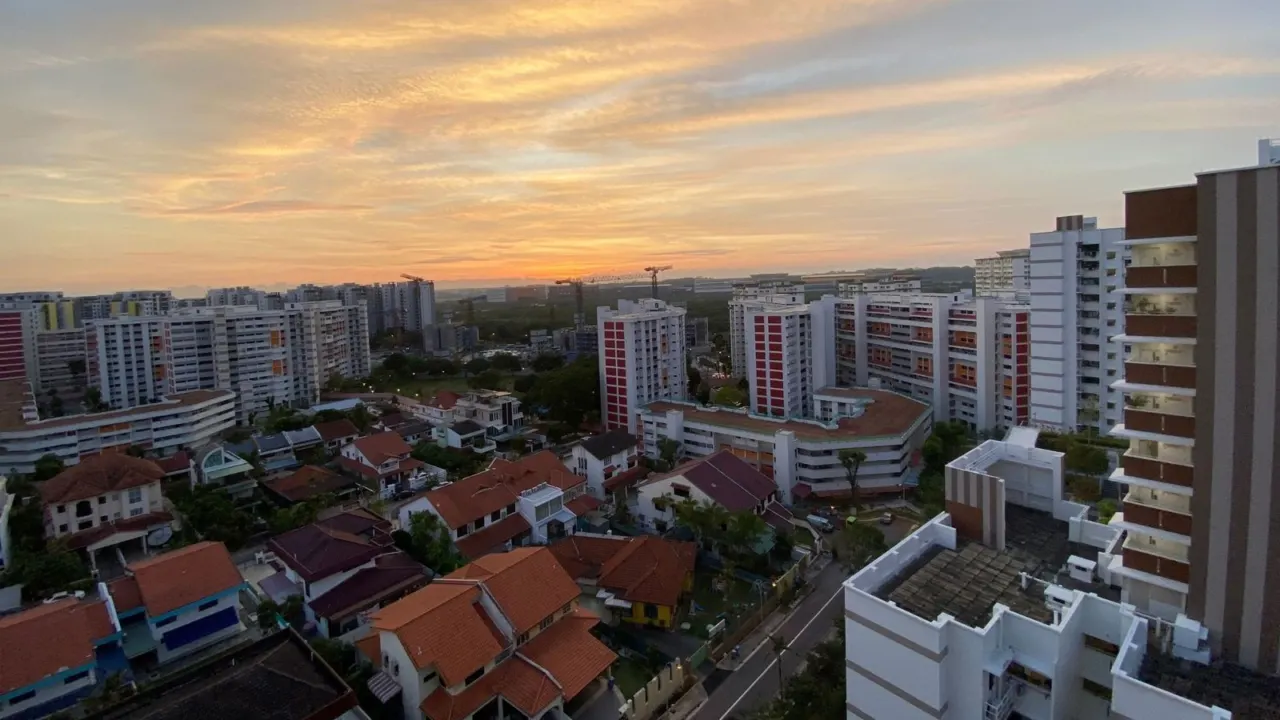
Buying an investment property in Singapore usually means paying ABSD, borrowing at stress-tested limits and waiting years for any income. LinkTown Residences (Hougang Central Residences) adds a location that tenants and future buyers understand at once: a home above Hougang MRT (NE14), a new bus interchange and what is set to be Hougang’s largest mall. Location alone does not make an investment work, though. The price you pay, how long you hold and how many similar units compete with yours decide that. Here are the four questions to answer before booking.
No forecasts, no promises. There are no launch prices yet. Figures below use analysts’ estimates of S$2,500–2,600 psf and indicative sizes based on the developers’ recent project Parktown Residence. Rules are as published; verify with IRAS, MAS and your bank.
Question 1: Is the entry price reasonable for the area?
The biggest risk at a well-located launch is overpaying on day one. Hougang has no recent new launch to compare with, so the useful reference points are nearby resale condos and similar integrated projects, based on reported transaction data:
| Project | Approx. psf | Context |
|---|---|---|
| LinkTown Residences | ~S$2,500–2,600 (analysts’ estimate) | Integrated, NEL plus future CRL interchange, expected completion 2030/2031 |
| Parktown Residence | ~S$2,360 at launch, later ~S$2,484 average | Integrated, Tampines North, launched February 2025 |
| Sengkang Grand Residences | ~S$2,011 (2025 resale average) | Integrated, completed around 2023 |
| The Florence Residences | ~S$1,877 (12 months to mid-2026) | Hougang resale |
| Riverfront Residences | ~S$1,736 (12 months to mid-2026) | Hougang resale |
At the estimated range, LinkTown would sit roughly S$500 psf above Sengkang Grand’s resale average. Part of that gap is age and lease, part is the interchange, and part is simply that new launches price ahead of resale. When real prices come out, the question is how much of that gap you are comfortable paying for. Our Sengkang Grand Residences comparison sets the two integrated projects side by side, and new launch vs resale covers the wider trade-off.
Question 2: What will it cost to hold until 2031?
A new launch is paid in stages while it is built. Here is an illustrative timeline for the indicative 2-bedroom at S$1,695,000, bought by a Singapore Citizen who already owns a home:
| Stage | Roughly when | Cash or CPF out (illustrative) |
|---|---|---|
| Booking fee (5%) | Launch day | S$84,750 cash |
| BSD, plus ABSD at 20% | Within 14 days of signing the S&P | S$54,350 + S$339,000 |
| Balance of down payment (15%) | About 8 weeks after the option | S$254,250 |
| Construction stages | Through the build | Loan drawn progressively; interest on the drawn amount only |
| TOP (25%) and CSC (15%) | From around 2030/2031 | Mostly loan-funded |
That is about S$732,000 committed within the first two months, before a single dollar of rent. Once the 75% loan of S$1,271,250 is fully drawn, interest at an assumed 2.8% a year is about S$35,600 a year. Your actual rate will differ; loans for uncompleted projects are mostly floating and pegged to SORA. After TOP, add maintenance fees (not yet announced), property tax at non-owner-occupier rates and agent fees. The payment scheme page lists every stage.
ABSD is the line that most changes the maths. See our ABSD guide for rates by profile and the married-couple refund.
Question 3: Who will rent or buy from you?
Demand here has clear sources: NEL commuters, the Cross Island Line from around 2030, Punggol Digital District a few stops up the line, Sengkang General Hospital, and a town of around 230,000 people with family ties to the area. Our LinkTown rental potential guide looks at each group, plus the latest HDB and URA rental data and a break-even rent test.
Supply is the other half. URA’s 2Q 2026 statistics show about 34,700 private homes (including ECs) expected to complete from 2029 onwards, and non-landed rents in the Outside Central Region slipped 0.3% in the quarter. About 830 homes at Hougang Central Residences completing at once will also compete with one another for tenants and buyers. Units with a better stack, a shorter walk to the MRT and an efficient layout usually stand out.
Unit types, in general terms
- 1-Bedroom + Study and 2-Bedroom (indicatively S$1.27m–1.32m and S$1.70m–1.76m): lowest quantum and the widest tenant pool, but usually the most numerous, so competition is higher.
- 3-Bedroom (indicatively S$2.67m–2.77m): appeals to families who rent and to owner-occupier buyers later.
- 4- and 5-Bedroom: mainly owner-occupier homes, with a smaller rental pool.
Question 4: How and when can you exit?
For homes bought on or after 4 July 2025, Seller’s Stamp Duty applies for four years, as announced: 16% if sold within the first year, 12% in the second, 8% in the third and 4% in the fourth. The holding period generally runs from the S&P date. A buyer who signs in 2027 and sells around TOP could still fall inside the fourth year, depending on dates. Our SSD guide works through sub-sale timing.
- Sub-sale before completion: possible, but SSD may apply and you may compete with other sellers in the same project.
- Sell after TOP: buyers can view a finished unit and move in, which widens the pool.
- Hold and rent: rent from completion, then decide once the CRL is running.
Who this suits, and who it may not
LinkTown Residences may suit an investor who can hold for the long term, has cash for ABSD without stretching, and values a location that is easy to explain to tenants and later buyers. It suits less well someone who needs rental income soon, is relying on a quick sub-sale, or whose budget only works at the lowest estimated psf. Owner-occupiers who may rent out later, such as couples planning a future move, sit somewhere in between.
Launch prices, the unit mix, stacks and maintenance fees are to be announced. The launch is expected in early 2027; UOL’s August 2026 results guide a 2H 2027 launch. Real prices will go on the price list page, and the project details page summarises what is confirmed.
Register to get LinkTown Residences prices, the unit mix and the elevation chart as soon as they’re released.
Frequently asked questions
Is LinkTown Residences a good investment?
That depends on the launch price, the unit and stack, your financing and how long you can hold. Prices are not out yet. Compare the eventual psf with nearby integrated and Hougang condos, and model holding costs to completion before deciding.
Can I sell LinkTown Residences before TOP?
Yes, as a sub-sale, but Seller’s Stamp Duty applies if you sell within four years of purchase for homes bought on or after 4 July 2025, as announced. The holding period generally runs from the S&P date; confirm with IRAS and your lawyer.
How much ABSD does an investor pay?
As published, Singapore Citizens pay 20% on a second home and 30% on a third, PRs 30% and 35%, and foreigners 60%. On an illustrative S$1,695,000 unit, 20% is S$339,000. Verify with IRAS.
When would a LinkTown unit start earning rent?
Only after completion, which is expected around 2030/2031. During construction you pay progressive instalments and loan interest with no rental income.
More the project guides
All guides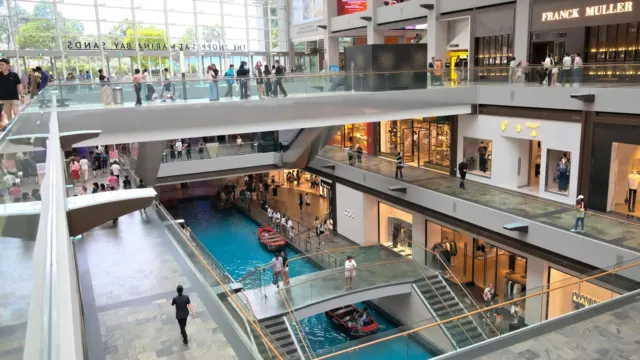
The project
Integrated Development Singapore: What It Means, Real Examples and How Hougang Central Compares
What makes a Singapore condo an integrated development, with real examples and how Hougang Central compares.

The project
LinkTown Residences for Families: Schools, Space and Daily Life at Hougang Central
Schools, family-sized layouts, the integrated hub and P1 timing: how LinkTown Residences fits family life.
The project
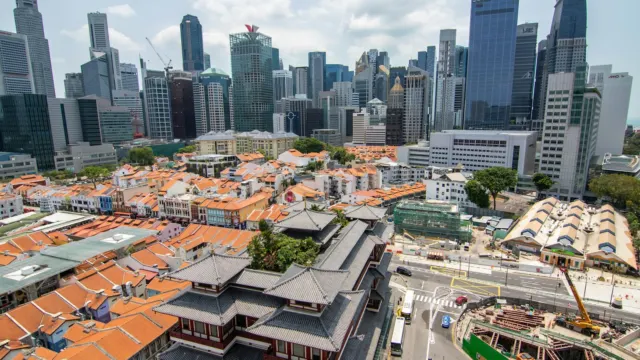
Hougang Central GLS: The S$1.5b Land Bid and What It Implies for Prices
The Hougang Central GLS tender decoded: the bids, the land rate, who owns what, and what S$1,179 psf ppr hints at for prices.